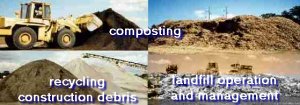
We are running out of viable options for the disposal of our trash. As a nation we generate 180 million tons of solids waste each year, a figure that has more than double in the past 30 years. At the same time, existing landfills are quickly reaching their capacity and new ones are increasingly difficult to site because of more stringent environment requirements and the NIMBY (not in my backyard) syndrome. In fact, two-thirds of all landfills have closed since 1970 and one-third of the remaining landfills will be closed in the next five years.
Few viable altenatives exist. For example, waste-to-energy incinerators are expensive to build and are also difficult to site because of environmental concerns similar to those of landfills. In addition, while recycling remains one of the best ways of capable of direct recycling and need another means of handling. Composting captures nature's way of recycling. Composting turn the organic portion of what we throw away into a product that is valuable as a soil enhancer for agriculture and in potting soil, mulch anf for other uses. MSW composting is economical when compared to sitting new landfills or incinerators. And, since composting reclaims valuable resources, it's the right thing to do. It can recycle as much as 60 percent of a community's garbage and is increasingly viewed as a realistic part of the solution to the solid waste problem. That's why we say, if you're not composting, you're not recycling.
Back to the home page.